
Nursery allergen management: every plate checked.
The 14 allergens matched to every child, a plate check before a risky meal is saved, allergy care plans and auto-injector expiry dates, and a kitchen that knows how many meals to cook, what to order and what food costs per child.
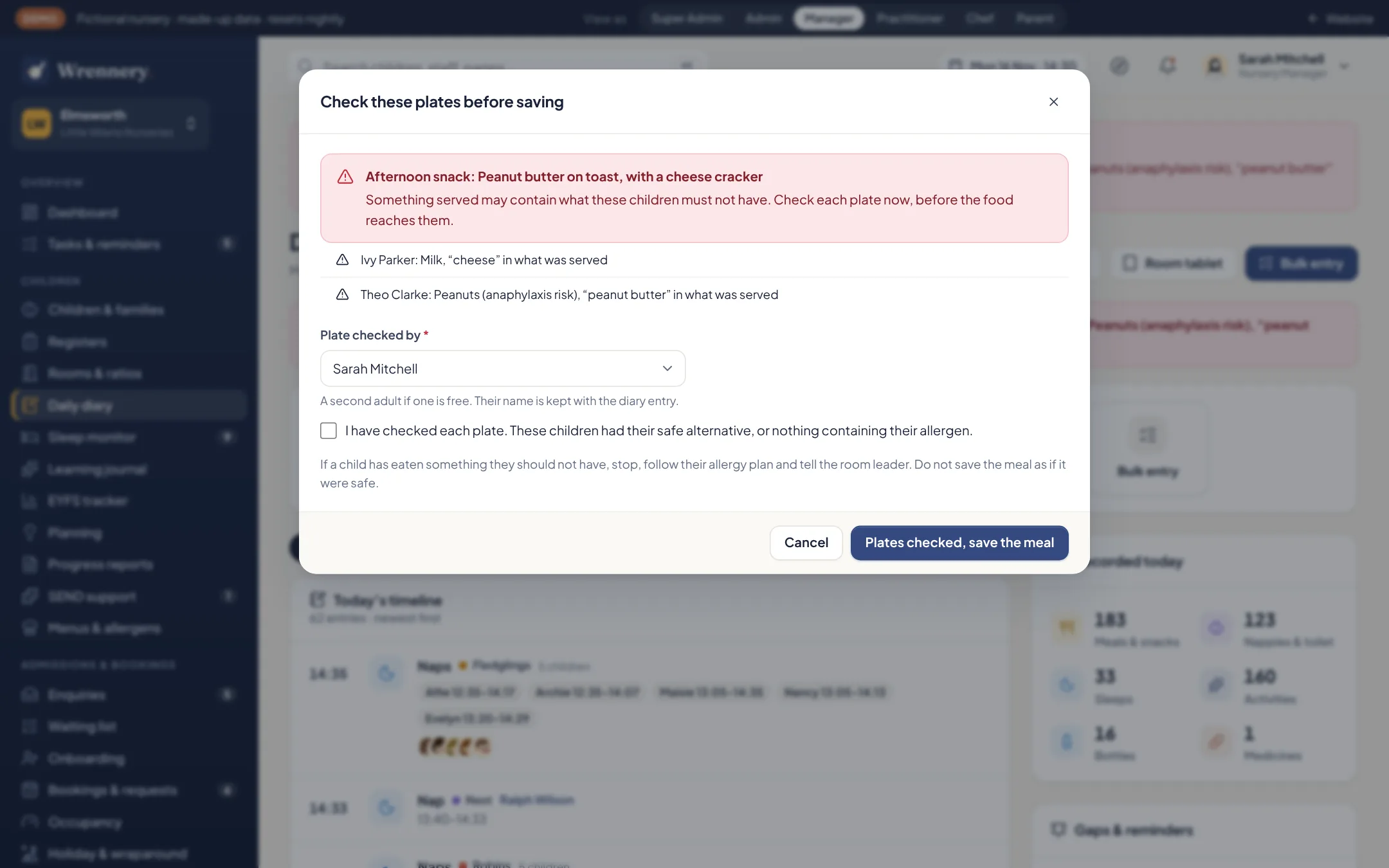
A plate check before the meal is saved
When staff record a meal, Wrennery reads what was served against each child’s allergies and today’s menu. If anything may contain a child’s allergen, the meal is only saved once the person who checked the plates signs it off.
- In the daily diary, bulk entry and on the room tablet
- The name of whoever checked is kept with the diary entry
- Today’s plate checks listed in the kitchen
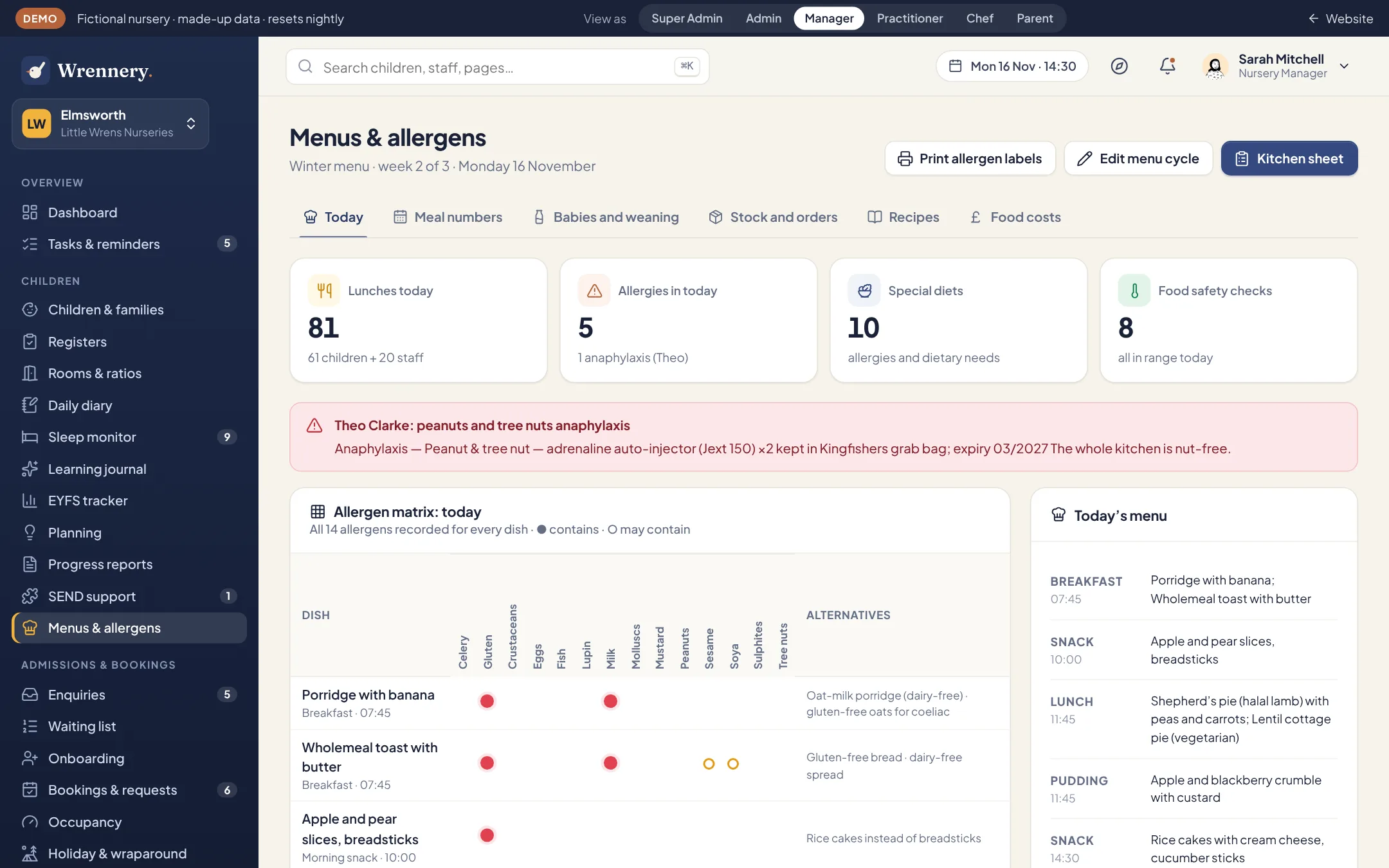
The 14 allergens, however a family writes them
“Nut allergy”, “no dairy” or “coeliac”: whatever families write on the registration form or staff type on the profile, Wrennery records it against the 14 allergens, at the most serious severity given, and keeps the family’s own words beside it.
- An allergen matrix for every dish on today’s menu
- A kitchen sheet of who needs what, room by room
- Allergies outside the 14, such as kiwi, kept as well
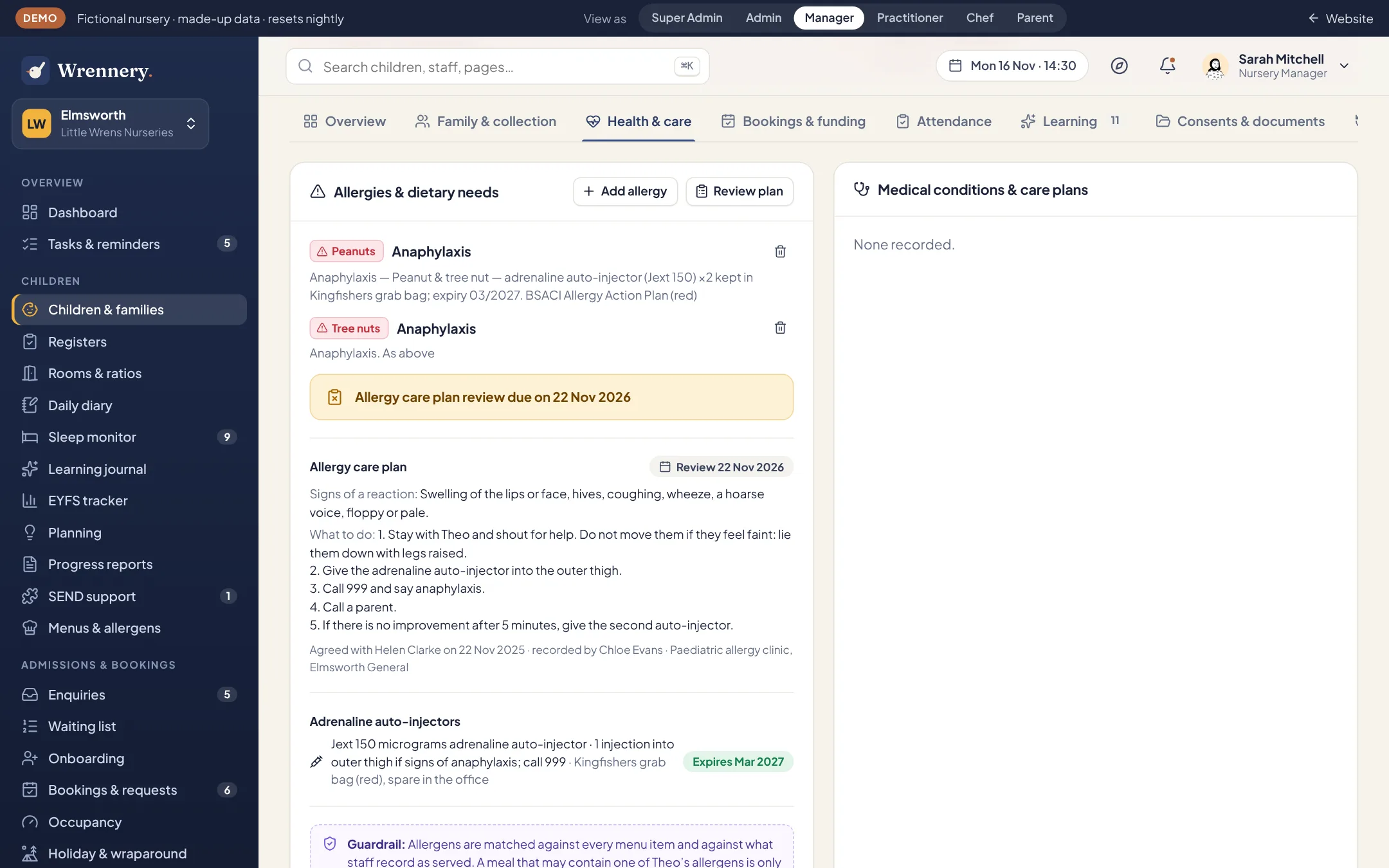
Care plans and auto-injectors, kept in date
Each child with an allergy has a care plan: the signs of a reaction and what to do, agreed with the family and reviewed on the date you set. Adrenaline auto-injectors are tracked with their expiry date and where they are kept.
- A task two weeks before a plan is due for review
- A task a week before an auto-injector expires, or when one is missing
- Anaphylaxis shown at the top of the child’s record and on the kitchen sheet
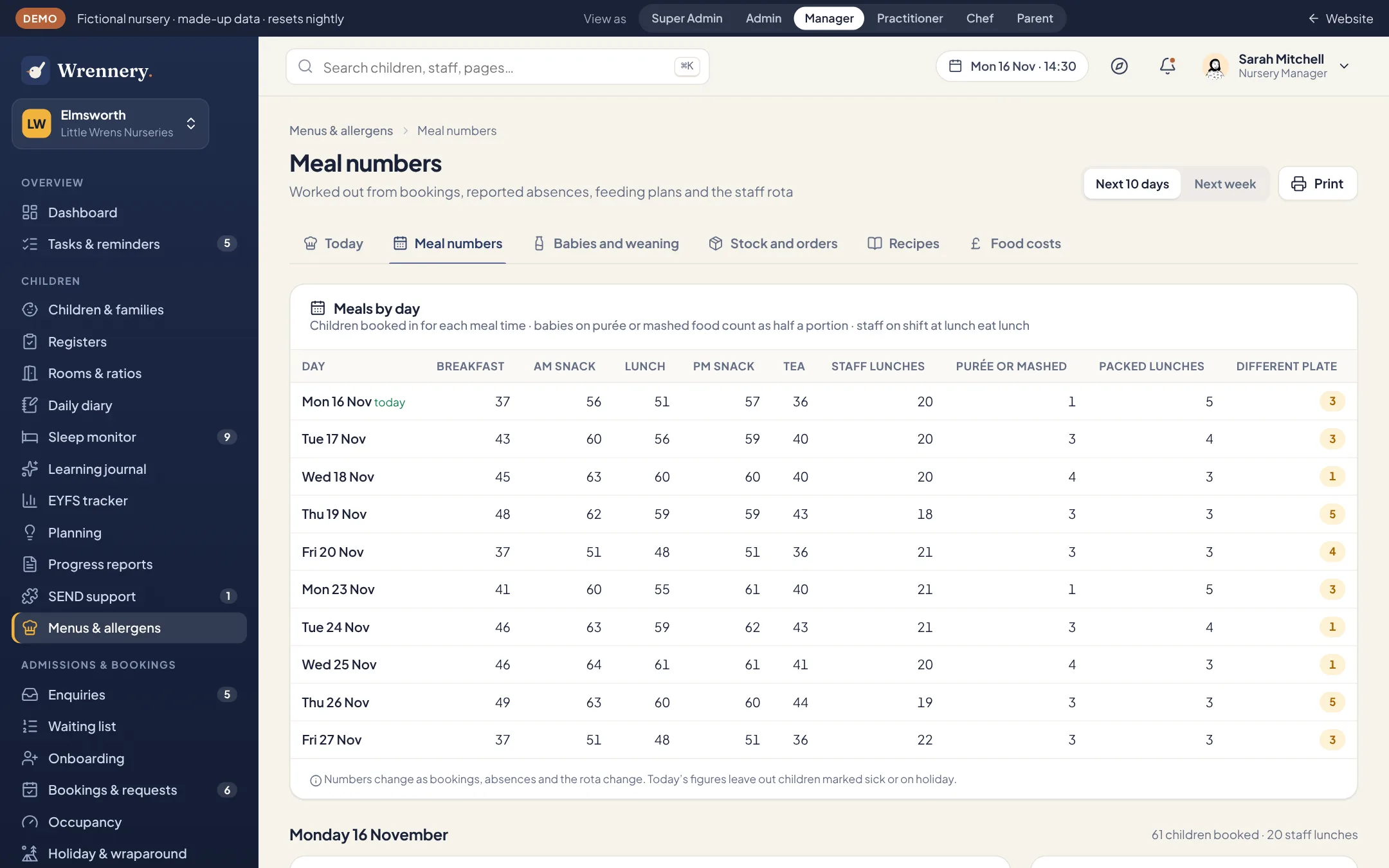
Meal numbers from your bookings
Breakfast, snacks, lunch and tea for the next ten days, worked out from bookings, reported absences, babies’ feeding plans and the staff rota, with the portions of each dish to cook.
- Babies on purée or mashed food count as half a portion
- Packed lunches and different plates counted
- Staff on shift at lunch included
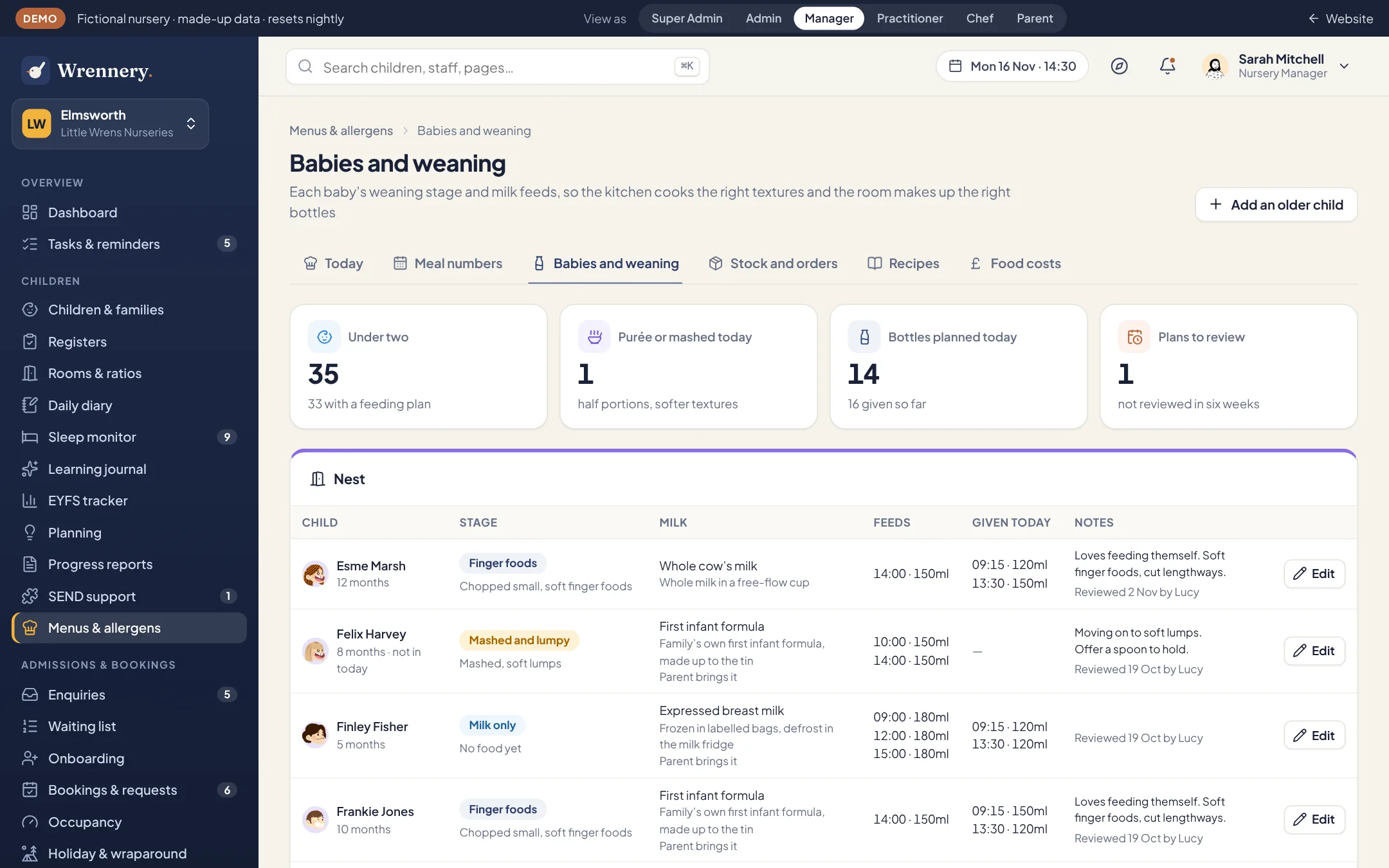
Weaning stages and milk feeds
Each baby’s stage, from milk only to finger foods, with their milk, bottle times and amounts, so the kitchen cooks the right textures and the room makes up the right bottles.
- Bottles planned and given today
- Notes on how each baby is getting on
- Plans not reviewed in six weeks flagged
Stock, orders and what food really costs
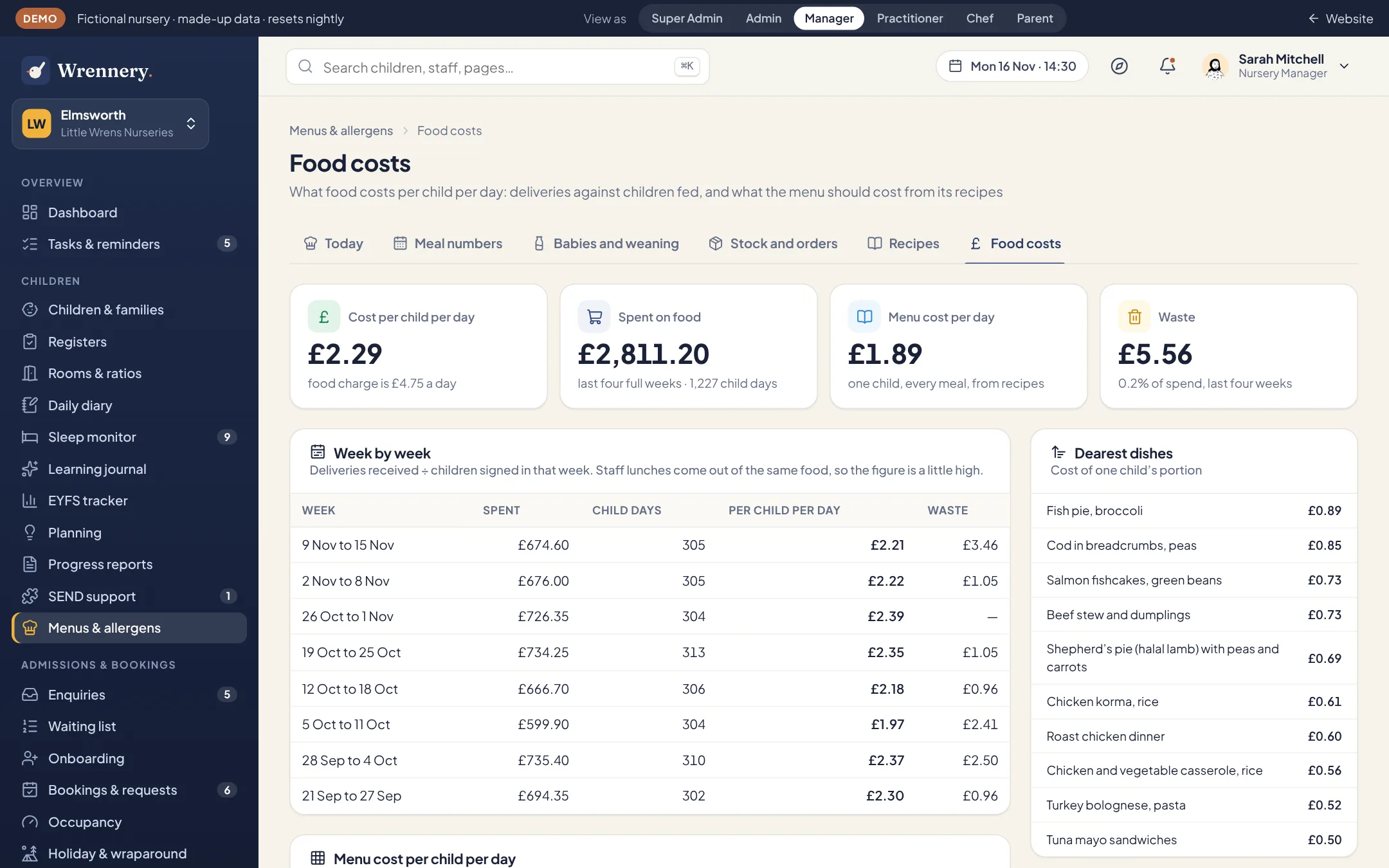
Recipes say what goes into one child’s portion. From those, next week’s menu and the meal numbers, Wrennery writes the order for each supplier, takes meals off stock, and shows what food costs per child per day.
- An order list for each supplier, less what is in stock and on order
- Deliveries booked in, and waste recorded
- An optional Chef role that sees the kitchen, not the rest of the nursery’s records
Yours to set up. Never outside the rules.
These rules are enforced for you. Set them stricter if you like, but Wrennery will not let them slip below the statutory line.
All guardrails- A meal that may contain a child’s allergen is only saved once someone signs off that they checked the plate.
- Every dish on the menu records all 14 allergens, as contains or may contain.
- Allergy care plans and auto-injector expiry dates are followed up with tasks before they lapse.
- While children eat, the kitchen sheet shows who in each room holds a paediatric first aid certificate, as the EYFS requires.
And the rest of what you’d expect.
An optional Chef role
Allergen labels to print
Fridge and food temperature logs
Recipes with a cost per portion
Orders by supplier
The DfE early years nutrition guidance beside the menu
Learn more about kitchen & allergies.
Nursery allergen and kitchen management: questions
What are the 14 allergens a nursery must track?
Celery, cereals containing gluten, crustaceans, eggs, fish, lupin, milk, molluscs, mustard, tree nuts, peanuts, sesame, soya and sulphites. Wrennery records every dish on the menu against all 14, as contains or may contain.
How does Wrennery stop a child being served their allergen?
When staff record a meal, Wrennery reads what was served against each child’s allergies and today’s menu. If anything may contain a child’s allergen, the meal is only saved once the person who checked the plates signs it off.
Can it produce a nursery allergen matrix?
Yes. There is an allergen matrix for every dish on today’s menu, a kitchen sheet of who needs what room by room, and allergen labels to print.
Does it keep allergy care plans and auto-injectors in date?
Yes. Each child with an allergy has a care plan agreed with the family and reviewed on the date you set, and adrenaline auto-injectors are tracked with their expiry date and where they are kept, with tasks before either lapses.
How does the nursery kitchen know how many meals to cook?
Meal numbers for the next ten days are worked out from bookings, reported absences, babies’ feeding plans and the staff rota, with the portions of each dish to cook.
Can we track nursery food costs and supplier orders?
Yes. Recipes set what goes into one child’s portion. From the menu and meal numbers, Wrennery writes the order for each supplier, takes meals off stock and shows what food costs per child per day.
Work it out now, free.
Built for all four UK nations: each nursery is set up for its own nation, with that nation’s ratios, funding, inspections and rules. See England, Scotland, Wales and Northern Ireland.
Children & families
Complete child records, family accounts, collection rules, consents and medical plans.
ExploreRegisters, ratios & diary
Live registers, real-time ratios, sleep checks and a daily diary parents love.
ExploreLearning & EYFS
Observations, trackers, two-year checks and termly reports aligned to the EYFS.
ExploreSee it with your own nursery in mind.
Explore the full demo as a manager, practitioner, director, IT administrator or parent. No sign up, and no sales call.