
Learning journeys parents read, and inspectors understand.
Observations, a cohort tracker, two-year progress checks and termly reports, built around the seven areas of the EYFS.
A learning journal that tells the story
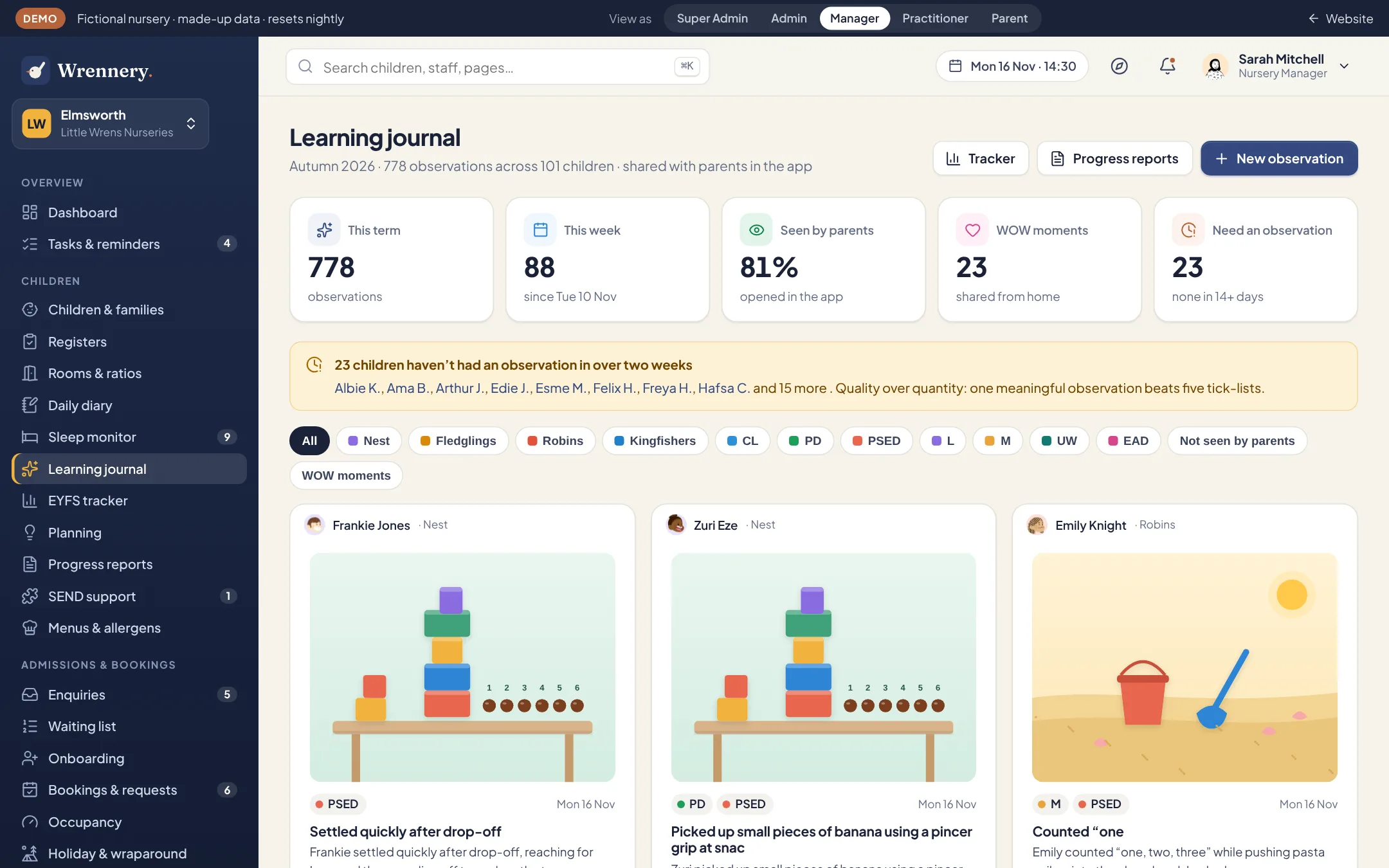
Observations with several photos and short videos, EYFS areas, characteristics of effective learning and next steps. Parents comment and add WOW moments from home.
- Filter by room, area or “not seen by parents”
- Photo consent respected, for videos too
- WOW moments from home appear in the journal
Fast to write, rich to read
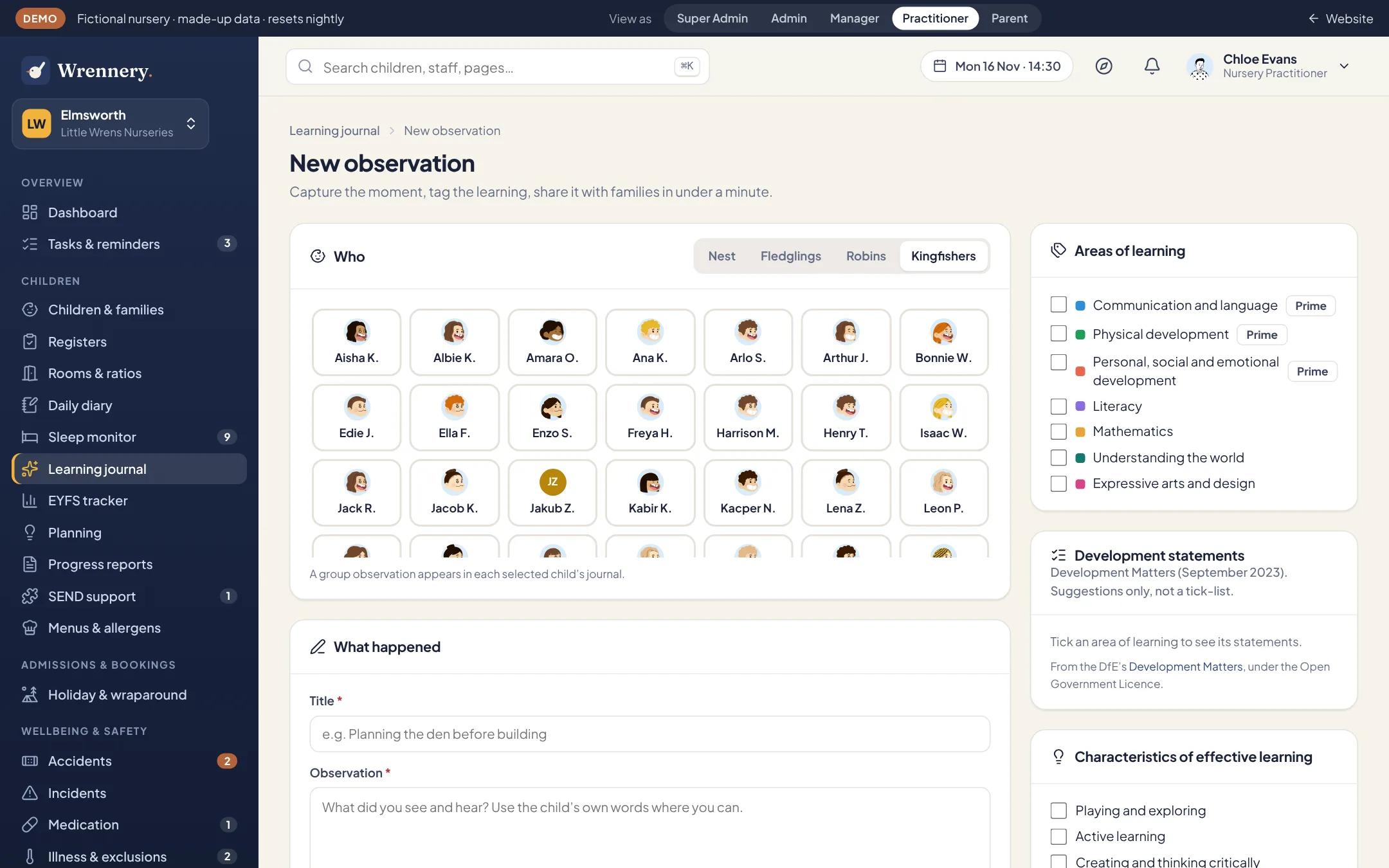
Pick the children, add photos or a short video, tag the areas and suggest a next step. It takes a minute.
- Every Development Matters statement, by age band, to search and tick
- Up to 12 photos and 3 videos, resized for phones with location data removed
- One observation for several children
- Keep a draft until it is ready to share
Cohort tracking without the spreadsheet
See every child against the seven areas, then look at the cohort by EYPP, SEND, EAL, gender and summer-born children.
- “Not on track” list
- Leuven wellbeing and involvement scales
- Export the tracker as a spreadsheet file

Termly reports in an afternoon
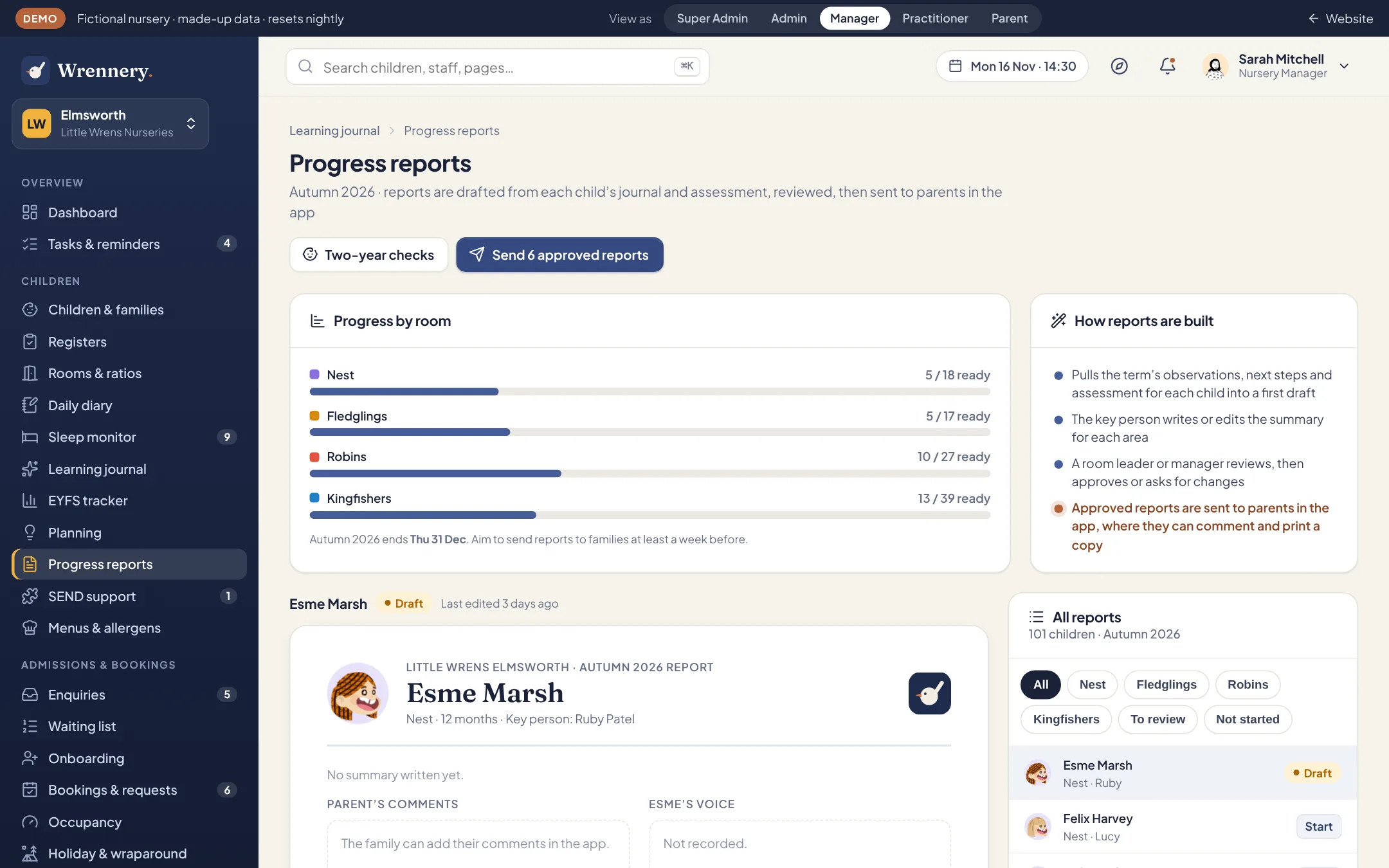
Reports pull together assessments and next steps for each child, ready for the key person to make their own.
- Two-year progress check with a copy for the health visitor
- Parents read reports in the app
- Print, or save as a PDF
Yours to set up. Never outside the rules.
These rules are enforced for you. Set them stricter if you like, but Wrennery will not let them slip below the statutory line.
All guardrails- A two-year progress check is prompted when a child turns 24 months, and includes a written summary for parents.
- Photo consent is checked before a photo is shared with other families.
- Each child’s key person is shown on their record and on the daily register.
- SEN support plans follow the SEND Code of Practice: agreed with parents before they start, reviewed on the date set, and kept cycle by cycle as evidence for an EHC needs assessment.
And the rest of what you’d expect.
Weekly planning board
In-the-moment planning log
SEND support plans, reviews and EHC dates
Contributions from home
Printable reports and two-year checks
Tracker export
Admissions & bookings
Enquiries, waiting lists, online registration, bookings and occupancy forecasting.
ExploreParent app & messaging
Messages, a noticeboard, the calendar, newsletters and urgent alerts, in a free app for every parent.
ExploreSafety & safeguarding
Accidents with body maps, incidents, medication, illness exclusions and DSL case management.
ExploreSee it with your own nursery in mind.
Explore the full demo as a manager, practitioner, director, IT administrator or parent. No sign up, and no sales call.